Skip to content

The Ethiopian Bible, corroborated

What the text says.
And how we know.

1 Enoch is not in most Bibles, but the Ethiopian Orthodox canon preserved it. enoch.wiki pairs that scripture with the sources that corroborate it: every claim labeled, every source tiered, anything still in review marked as such.

A scholarly-neutral study resource for the Book of Enoch, Jubilees, Meqabyan, and the wider Ethiopian Tewahedo canon.

Every claim carries its certainty:
Textually attestedHistorically corroboratedScholarly consensusContested / minorityTradition / devotionalSpeculative

01 · The App

One place to read, trace, and question the canon

The text is the hero; everything else serves it. Read verse by verse, then follow the evidence.

The reader: scripture, paired with its evidence

The growing text of the Ethiopian Tewahedo canon (1 Enoch, Jubilees, Meqabyan, and more), starting with the Book of 1 Enoch. Each verse sits one tap from the sources that contextualize, support, or challenge it. Credibility tiers and scores stay visible, never buried.

  • Verse-by-verse reading
  • Scripture beside its evidence
  • Tiers and scores always visible

Search across everything

One search over verses, sources, and evidence. Type a name, an idea, or a passage and jump to the scholarship around it.

  • Verses, sources, and evidence
  • Names, ideas, and passages

Knowledge graph

Angels, kings, cities, feasts, calendars. Every figure, place, and event is a node to explore, with the passages and evidence that connect them.

  • Figures, places, and events as nodes
  • The passages that connect them
  • Evidence behind every link

Timeline & themes

Walk the text chronologically, from the Enochic writings to their Ge'ez translation. Or follow a theme (the calendar, the heavens, the Son of Man) across the books.

  • From composition to the Ge'ez translation
  • Theme threads across the books
  • Calendar, heavens, Son of Man

Study tools & a study companion

Flashcards with spaced repetition and a daily insight from the canon. An AI companion is on the roadmap to answer questions, summarize passages, and cite its sources.

  • Flashcards with spaced repetition
  • Answers that cite their sources

02 · How We Vet

Trust is the product

Anyone can publish claims about ancient texts. enoch.wiki holds a higher bar: a three-stage editorial pipeline stands between raw research and anything the public reads.

01

Research & ingestion

Scripture, themes, cross-references, and external sources are gathered with credibility tiers, perspective tags, and claim-type labels from the start.

02

The editorial gate

Every item moves draft → auto-corroborated → in editorial review against a written rubric. Anything rejected, unrevisable, or unverified stays out.

03

Public, on approval only

Only approved topics and articles are served. Each carries its sources, claim label, and corroboration score, right next to the claim.

The review rubric

Nothing ships until a reviewer confirms every line of it:

  • Sources cited and retrievable
  • Minimum credibility tier met for authoritative claims
  • Claim type labeled, every time
  • Perspectives represented: no unflagged single-source claims
  • No fabricated citations
  • Contested or sensitive claims flagged and contextualized
  • Authority never overstated

Source credibility tiers

Every source is graded, and the grade travels with every claim it backs:

Peer-reviewed / academic

Peer-reviewed journals, university presses, scholarly monographs.

Reputable reference

Established encyclopedias and museum collections: Brill, Oxford, Cambridge.

Popular / journalistic

Reputable journalism and popular reference: the Biblical Archaeology Society, Smithsonian.

Self-published / forum

Blogs, forums, video, self-published books. Surfaced only with explicit flagging, never as authority.

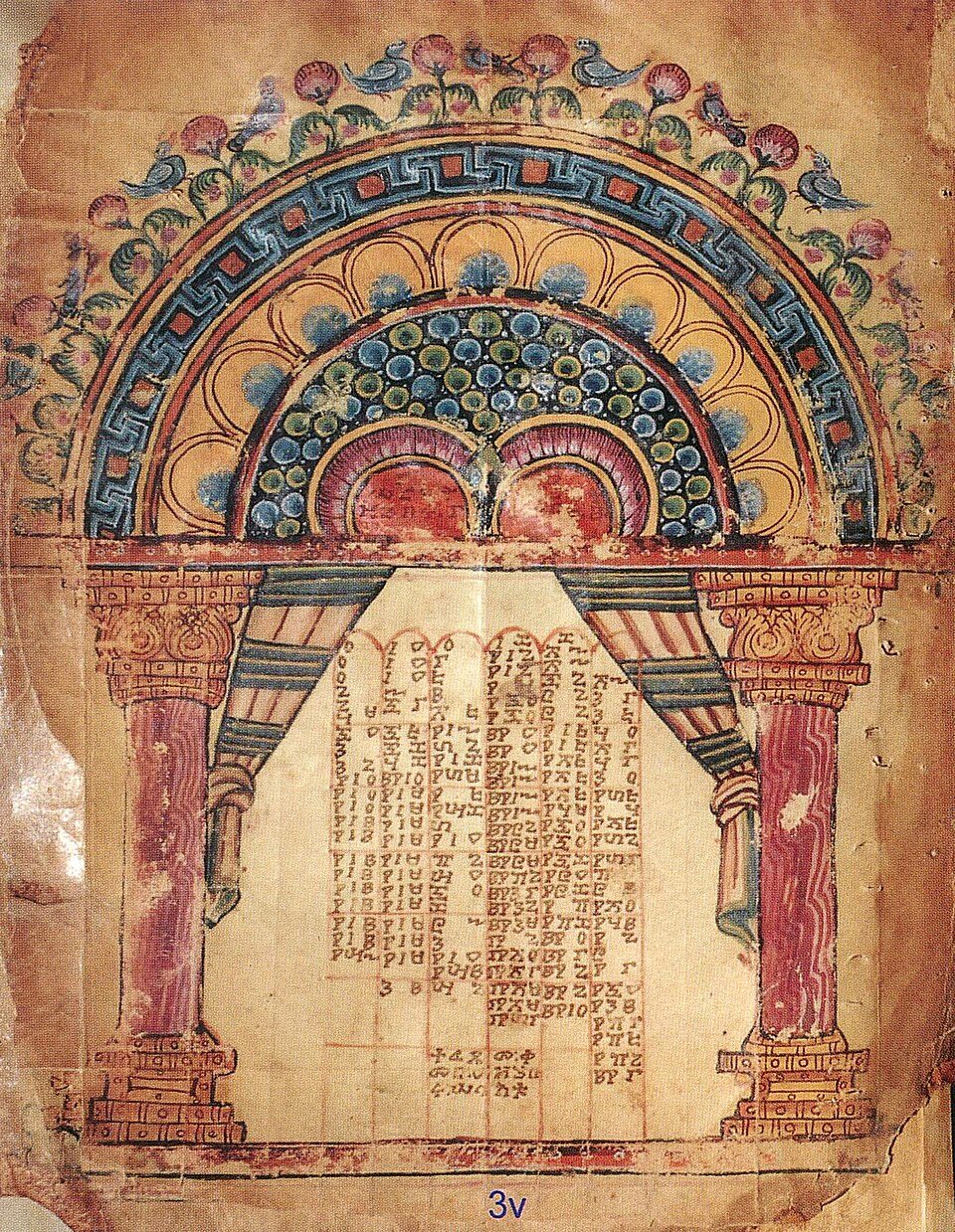
Illuminated canon table with Ge'ez script from the Garima Gospels, among the oldest preserved manuscripts of the Ethiopian tradition
The Garima Gospels. An illuminated canon table in Ge'ez, the classical language of the Ethiopian church. The same tradition preserved the Book of Enoch after the West set it aside. Photograph via Wikimedia Commons.

03 · Vision

A preserved book deserves a careful reader

The Book of Enoch moves through angels and heavens, calendars and judgment, in a voice that shaped Jewish and Christian thought for centuries. It survived only because the Ethiopian Orthodox Tewahedo Church kept it in its canon. Today it lives mostly in two places: the library of scholars, and the feeds of the “forbidden knowledge” internet. The first is hard to reach; the second is built to mislead.

Credible, not cryptic. Luminous, not sensational.

enoch.wiki is the third place: a corroborated knowledge base for the Book of Enoch and the wider scriptural canon, held to an editorial standard. What the text says, what scholars corroborate, where traditions disagree, what is plain speculation. Each labeled in plain words, each backed by sources you can check. Scholarly-neutral, reverent toward the material, neutral toward belief.

The vision is simple: anyone curious about these texts should find the truth about them. Stated carefully, sourced openly, kept honest by a gate that never sleeps.

01Preserve the Ethiopian context
02Label every claim type
03Show the sources

Questions, answered plainly

The honest version, up front: including what this site is not.

What does “scholarly-neutral” mean here?

We report what the texts say, what evidence supports, and where scholars and traditions disagree. No preaching, no debunking, no pulpit or conspiracy tone. Multiple perspectives are represented; overconfident claims get flagged.

Which books does enoch.wiki cover?

The Ethiopian Tewahedo canon, with 1 Enoch, Jubilees, and Meqabyan at the center, plus the cross-references that connect them to the wider scriptural canon. Public pages appear only after passing the editorial gate, so coverage grows as review completes.

How do I know which claims are solid?

Every published claim carries a claim-type label (textually attested, scholarly consensus, contested, speculative, and more), the source and its credibility tier, and a corroboration score. Research still in the pipeline appears only where it is explicitly marked unverified: flagged, not authoritative. The full label system is on the site’s “How we vet” page.

Is the study companion’s AI reliable?

It answers from the site’s own vetted corpus and cites its sources. But it is a study aid, not an authority. The reader, the evidence panels, and the sources themselves are always the final word.

Who is building this?

An independent effort, built in the open with care for the material. If you work in scholarship, manuscripts, or the Ethiopian tradition and want to help the evidence get better, start by reading the site. The gaps will be obvious, and the gate is honest about them.

Begin with the Book of the Watchers

Read 1 Enoch beside its evidence. Every verse is one tap from the sources that corroborate it.

Open app